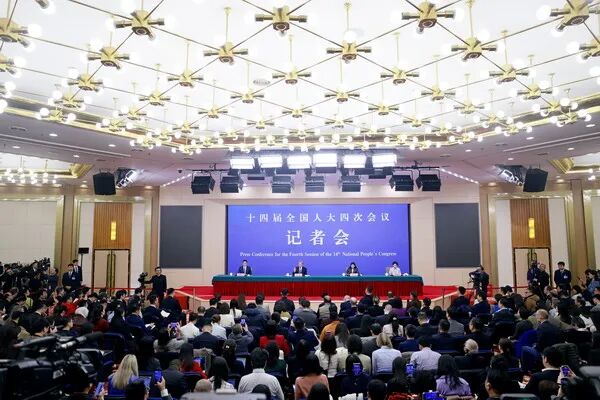
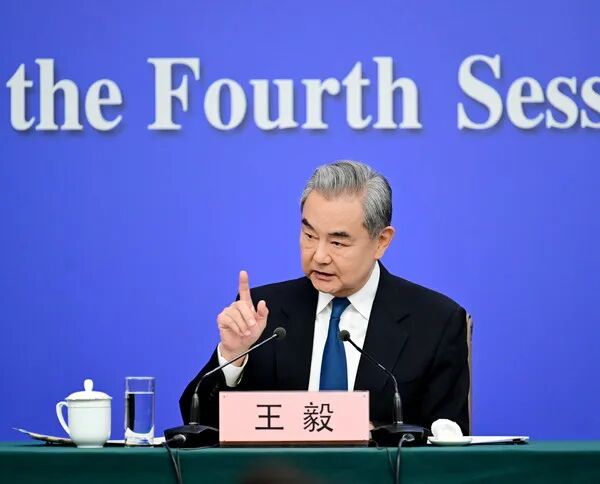
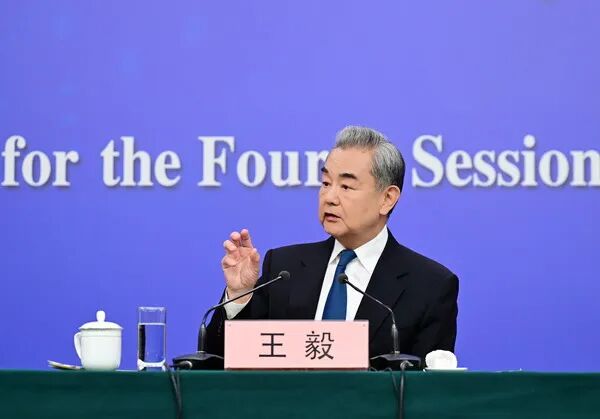
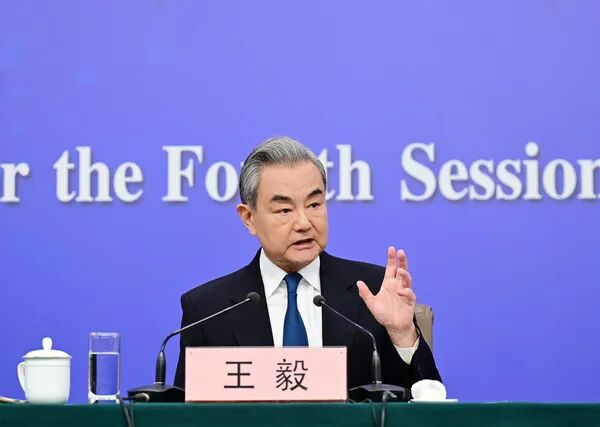
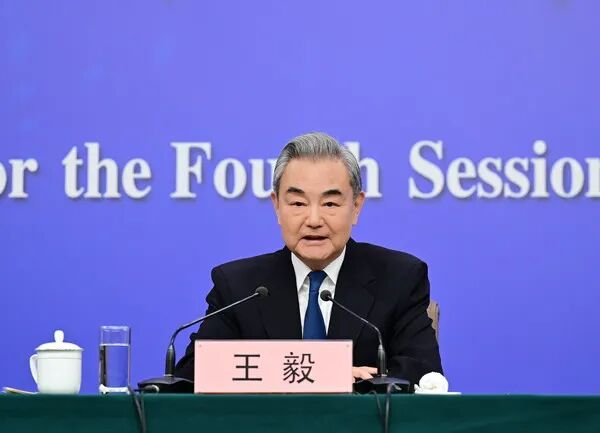
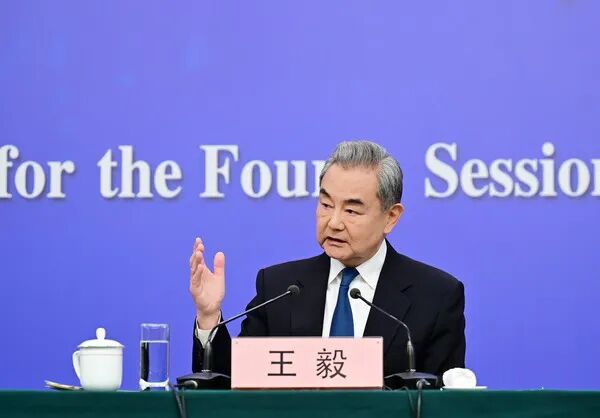
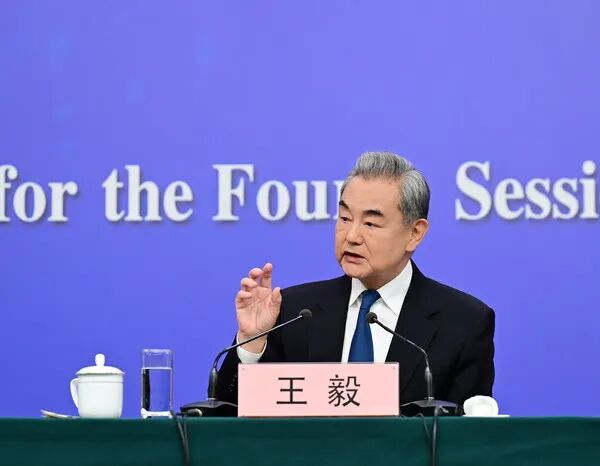
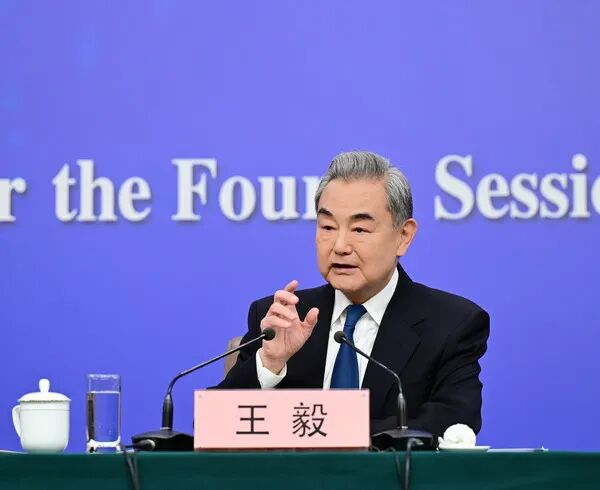
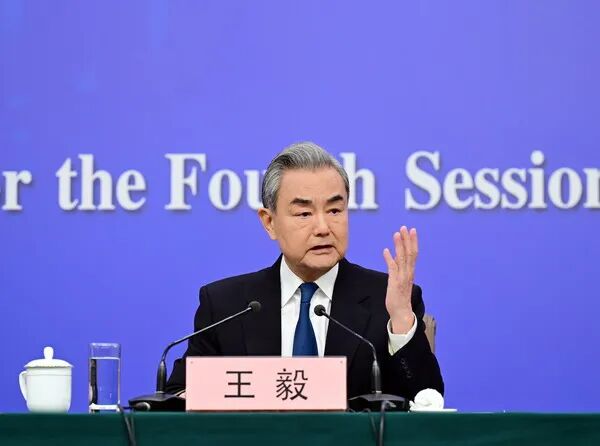
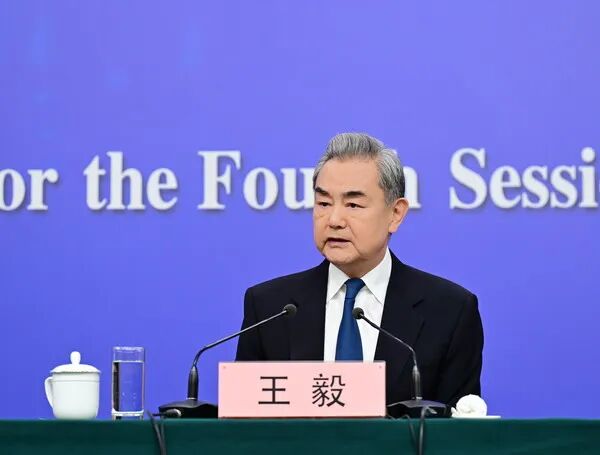
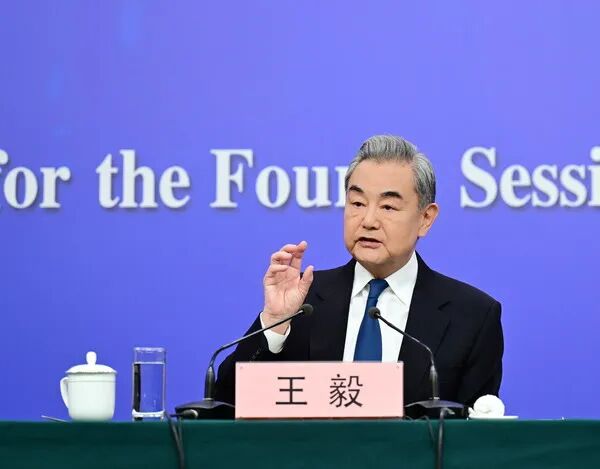
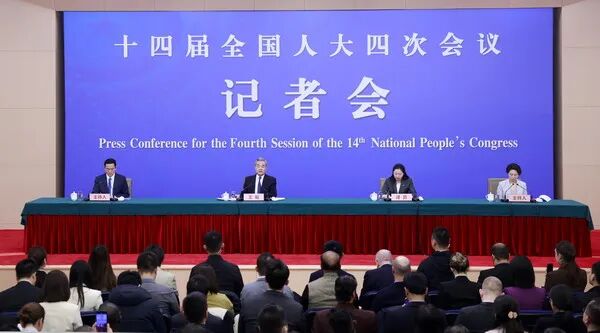
On March 8, 2026, the fourth session of the 14th National People's Congress held a press conference at the Media Center. Wang Yi, Member of the Political Bureau of the CPC Central Committee and Minister of Foreign Affairs, answered questions from Chinese and foreign journalists on China's foreign policy and external relations.
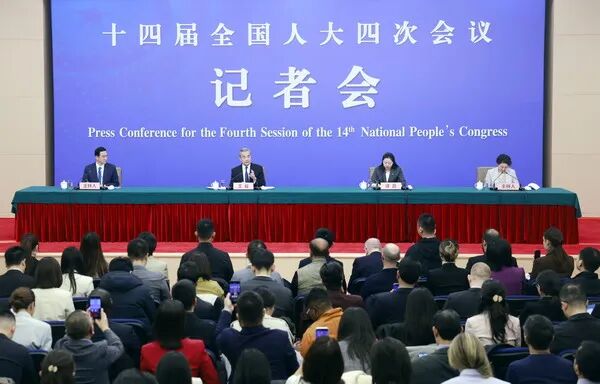
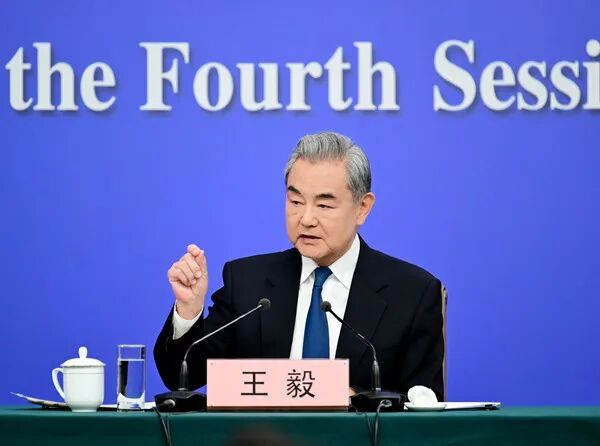
Wang Yi: Friends from the press, good morning! It's a great pleasure to meet you all again. Today is International Women's Day. First of all, I would like to extend my heartfelt festive greetings to all women. I also take this opportunity to express my sincere gratitude to friends from the media and people from all walks of life for their care and support for China's diplomacy. Today's world is witnessing an accelerated evolution of changes unseen in a century, with transformation and turmoil intertwined, and wars and conflicts emerging one after another. Today's China is pressing ahead with national rejuvenation at full speed, with an unstoppable momentum toward national rejuvenation and growing international influence. Under the strong leadership of the Party Central Committee with Comrade Xi Jinping at its core, China's diplomacy focuses on the central tasks of the Party and the country, follows the scientific guidance of Xi Jinping Thought on Diplomacy, firmly safeguards national sovereignty, security and development interests, firmly upholds international rule of law, fairness and justice, firmly opposes all unilateral acts and power politics and bullying, firmly abides by and fulfills its due international obligations, and firmly stands on the right side of history. As the most important force for peace, stability and justice in the world, we are full of confidence in the future of humanity. We stand ready to work with all like-minded countries to continuously write a new chapter of peace, development, cooperation and win-win results for the times toward the lofty goal of building a community with a shared future for mankind. Now, I am ready to take your questions.
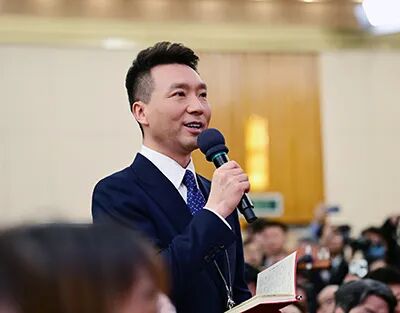
Reporter from CCTV of China Media Group: 2025 was an extraordinary year for China's diplomacy. Could you brief us on the achievements of head-of-state diplomacy over the past year? What new highlights can we expect this year?
Wang Yi: Head-of-state diplomacy is the anchor of China's diplomacy. Over the past year, facing the turbulent international situation, President Xi Jinping conducted magnificent head-of-state diplomacy, creating important historic moments.
Over the past year, President Xi Jinping held important meetings and conducted strategic communication with leaders of major countries in the world, pioneering new practices of dialogue and coordination among major countries. He visited Southeast Asia, Russia, Central Asia and the Republic of Korea, consolidating a new situation of good-neighborliness and friendship with neighboring countries. He presided over the Tianjin Summit of the Shanghai Cooperation Organization and the China-CELAC Forum, gathering new impetus for the great unity of the Global South. He attended a series of activities marking the 80th anniversary of the victory of the Chinese People's War of Resistance Against Japanese Aggression and the World Anti-Fascist War, sending a new strong voice in defense of peace and justice.
Over the past year, the international community has better understood China, gotten closer to China, and placed greater trust and expectations in China through head-of-state diplomacy. More and more countries have realized that China's diplomacy, personally planned and directed by President Xi Jinping, provides the most valuable stability and certainty for a turbulent world and has become an irreplaceable pillar amid global chaos. In particular, the series of important initiatives and concepts put forward by President Xi Jinping demonstrate extraordinary strategic vision and broad global vision, pointing out the right direction for the evolution of the changes unseen in a century.
This year, President Xi Jinping will receive guests from all sides in China, preside over major home-field diplomatic events such as the APEC Economic Leaders' Meeting and the 2nd China-Arab States Summit, and undertake several important overseas visits. This will surely push China's relations with the world toward a more positive direction, open new prospects for building a community with a shared future for mankind, and enable the Chinese nation to make new contributions to world peace and development.

Reporter from Sputnik: Facing the complex international situation, how will the two major countries of China and Russia counter attempts to reshape international law and global trade rules?
Wang Yi: This year marks the 30th anniversary of the establishment of the China-Russia strategic cooperative partnership and the 25th anniversary of the signing of the Treaty of Good-Neighborliness and Friendly Cooperation Between the People's Republic of China and the Russian Federation. Facing the turbulent international situation, China-Russia relations have always remained "as firm as a mountain amid wind and rain".
Why can we reach such a state? I think the main reason is that the China-Russia strategic cooperative partnership has been built on the basis of equality, respect and mutual benefit from the very beginning, reflecting the connotation of a new type of international relations and representing the direction of a new type of major-country relations.
China and Russia are strategically independent. We always respect each other's core interests, do not impose our own will and agenda on each other, and adhere to the principle of non-alignment, non-confrontation and non-targeting of third parties.
China and Russia enjoy a high degree of political mutual trust. Back-to-back coordination is the defining feature of China-Russia relations, which is not afraid of any external provocation or pressure and has strong strategic resilience.
China and Russia maintain close coordination in actions. On major international and regional issues, China and Russia share the most strategic consensus and conduct the closest strategic coordination, including the issue of safeguarding international rules and order that you mentioned.
The post-World War II international order has come to a critical juncture after 80 years of trials and tribulations. Last year, the heads of state of China and Russia attended each other's celebrations marking the victory of the anti-fascist war. The two sides issued three weighty joint statements on deepening comprehensive strategic coordination, consolidating global strategic stability and upholding the authority of international law, sending a clear signal to the world that we will unswervingly uphold the correct view of World War II history, defend the victory of World War II, and oppose unilateral acts and power politics. Eighty years ago, we made "China-Russia contributions" to the establishment of the post-war order. Today, 80 years later, we will inject "China-Russia energy" into embracing a multi-polar world.
Reporter from Shenzhen TV: China has announced that it will hold the 33rd APEC Economic Leaders' Meeting in Shenzhen in November this year. What important outcomes will this year's meeting achieve?
Wang Yi: This year is the APEC China Year, and it is also the 3rd time that China has served as the host. From Shanghai in 2001, to Beijing in 2014, and now to Shenzhen this year, APEC has forged ahead through trials and tribulations over the past 25 years, experienced the ups and downs of regional cooperation, and witnessed China's unwavering original aspiration to move forward together with the Asia-Pacific.
To be a good host, China's work throughout the year will focus on one central goal: turning the building of an Asia-Pacific community from a goal into action and from a blueprint into reality. The concept of an Asia-Pacific community has been put forward for decades, but it must not remain on paper or be confined to a vision. We hope to find the answer in Shenzhen, build consensus among all parties, define priority areas, and take feasible measures to make the building of an Asia-Pacific community a broad consensus and vivid practice of the people in the region.
After close communication with all parties, we have set the theme of this year's meeting as "Building an Asia-Pacific Community for Common Prosperity". The Shenzhen APEC will focus on the three priority areas of openness, innovation and cooperation, to redefine the direction and rally strength for Asia-Pacific cooperation at a crossroads. We will build the main pillars for the development of an Asia-Pacific community, coordinate different paths for the Asia-Pacific Free Trade Area process, formulate reasonable arrangements for regional connectivity, and vigorously promote the three major transitions of digitalization, intelligentization and greening. We will hold more than 300 events in multiple cities across the country throughout the year, with various provinces and cities participating, and all economies having the opportunity to contribute.
Shenzhen is an important window of China's reform and opening-up, a shining card of socialism with Chinese characteristics, and an innovation frontier of the Guangdong-Hong Kong-Macao Greater Bay Area. We are ready to work with all parties to set APEC sailing again from Shenzhen toward the goal of an Asia-Pacific community.
Reporter from Phoenix TV: The United States and Israel have once again launched military strikes against Iran, and the conflict is spreading to the entire Middle East region. What is China's position on resolving the Iranian issue?
Wang Yi: This is a matter of concern to all parties and the focus of the current international situation. China upholds an objective and impartial attitude and has repeatedly clarified its principled position, which can be summed up in one sentence: a ceasefire and an end to the fighting. As an ancient Chinese saying goes: "War is a fatal weapon and must be used with caution." Facing the war-torn Middle East, I want to say that this is a war that should never have happened and a war that benefits no one. History in the Middle East has repeatedly taught us that military force is not the solution to problems, and armed confrontation will only add new hatred and breed new crises. China once again calls for an immediate end to military operations, to prevent the situation from escalating in turn, and to avoid the spread of war.
China believes that the correct and proper resolution of issues related to Iran and the Middle East should adhere to several basic principles:
First, respect national sovereignty. Sovereignty is the cornerstone of the existing international order. We advocate that the sovereignty, security and territorial integrity of Iran and all countries in the Gulf region should be respected and must not be violated.
Second, refrain from abusing force. A strong fist does not equal a strong reason, and the world cannot return to the law of the jungle. The wanton use of force cannot prove one's strength, and people must not become innocent victims of war.
Third, adhere to non-interference in internal affairs. The people of the Middle East are the true masters of the region, and Middle East affairs should be independently decided by countries in the region. Plotting color revolutions and seeking regime change are unpopular.
Fourth, resolve hotspot issues through political means. China has always advocated that peace is precious. All parties should return to the negotiating table as soon as possible, resolve differences through equal dialogue, and work hard to achieve common security.
Fifth, major countries should play a constructive role and use their strength with goodwill. There is another ancient Chinese maxim: "Without benevolence and righteousness, the balance of attack and defense will shift." Major countries should uphold justice and follow the right path, and contribute more positive energy to peace and development in the Middle East.
As a sincere friend and strategic partner of Middle Eastern countries, China is ready to work with Middle Eastern countries to implement the Global Security Initiative, restore order to the Middle East, peace to its people, and tranquility to the world.
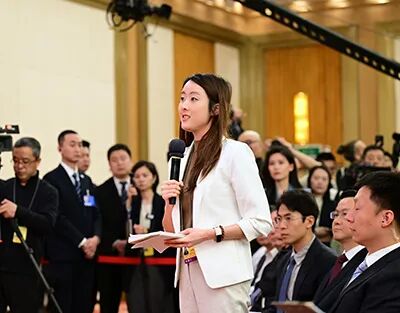
Reporter from Channel News Asia: China put forward the Global Governance Initiative last year. Some observers believe that China's proposal of this initiative and its participation in mechanisms such as the SCO and BRICS show that China hopes to play a greater role in global governance and directly confront Western-dominated policies and mechanisms. What is your response to this?
Wang Yi: In today's world, global challenges are emerging one after another, the governance deficit is becoming more prominent, and multilateralism is facing severe shocks.
The Global Governance Initiative put forward by President Xi Jinping comes at the right time and has quickly won the support and response of more than 150 countries and international organizations. The UN Secretary-General immediately stated that the core concepts of the initiative are highly consistent with the beliefs upheld by the United Nations. The "Friends of the Global Governance Initiative" initiated by China has been established successively at the UN Headquarters in New York and Geneva, with countries, especially those of the Global South, joining enthusiastically.
Why can the Global Governance Initiative gain such wide support? I think the key lies in the five concepts emphasized by the initiative: sovereign equality, international rule of law, multilateralism, people-centered approach, and action-oriented. These concepts meet the common aspirations of the international community and reflect the shared voice of people of all countries.
The clearest signal sent by the Global Governance Initiative is that the leading role of the United Nations must be upheld and must not be shaken; the core role of the United Nations should be strengthened and must not be weakened. Although the United Nations is not perfect, without it, the world would only be a worse place. Breaking away from the United Nations to start anew, or even forming various small cliques and blocs, is unpopular and unsustainable.
The clearest requirement put forward by the Global Governance Initiative is that the United Nations needs to keep pace with the times, improve the governance system through reform to adapt to the development of the international situation and changes in the global balance of power in the 21st century. In particular, it is necessary to enhance the voice and representation of the Global South, better reflect the legitimate demands of the vast number of developing countries, with the goal of building a more just and reasonable global governance system.
China is a founding member of the United Nations and a staunch defender of the UN cause. As the largest developing country, we are more aware of the ardent expectations of the Global South. The Shanghai Cooperation Organization and BRICS mechanisms in which China participates all take abiding by the UN Charter as the first guiding principle, and are all exploring and accumulating useful experience for reforming and improving global governance. China calls on more countries to participate in and support the Global Governance Initiative, and work together to revitalize, uphold and strengthen the United Nations.
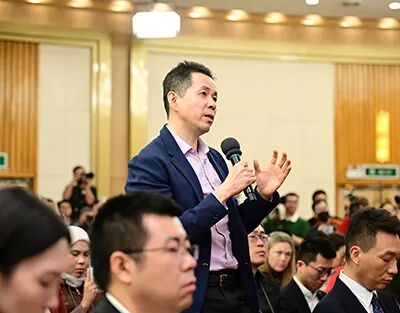
Reporter from CNN: Since President Trump returned to the White House, China-US relations have been volatile. His visit to China at the end of this month is highly anticipated. What impact will the US and Israeli strikes on Iran have on this visit? What are China's expectations for the outcomes of President Trump's visit to China and the next development of China-US relations?
Wang Yi: China-US relations affect all parties and have a global impact. The failure of the two countries to engage with each other will only lead to misunderstanding and miscalculation, and moving toward conflict and confrontation will even harm the world. Both China and the US are major countries; neither can change the other, but they can change the way they get along. That is to uphold an attitude of mutual respect, keep to the bottom line of peaceful coexistence, and strive for the prospect of win-win cooperation. This is in the interests of the two peoples and meets the expectations of the international community.
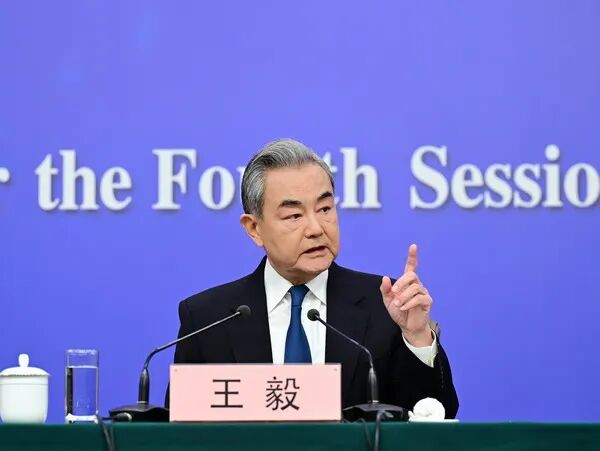
We are encouraged that the two heads of state have personally maintained good exchanges at the highest level, providing important strategic guarantee for the improvement and development of China-US relations, and promoting the overall stability of China-US relations amid ups and downs. This year is a "big year" for China-US relations, and the agenda for high-level exchanges is already on the table. What needs to be done now is for both sides to make thorough preparations, create a suitable environment, manage existing risks, and remove unnecessary disturbances. China's attitude has always been positive and open; the key is for the US side to meet us halfway. I believe that as long as the two sides treat each other with sincerity and trust, we will be able to continuously lengthen the list of cooperation, shorten the list of problems, and under the strategic guidance of the two heads of state, achieve outcomes satisfactory to both peoples and reach consensus welcomed by the international community, making 2026 a landmark year for China-US relations to move toward sound, stable and sustainable development.
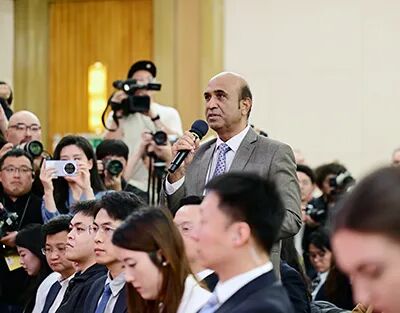
Reporter from Associated Press of Pakistan: We have noticed that China's surrounding environment was not peaceful last year, with political changes in many countries and an increase in contradictions and disputes among regional countries. How does China view the surrounding situation?
Wang Yi: Mutual assistance is a Chinese tradition, and valuing good-neighborliness is part of Chinese culture. We always put neighboring countries at the top of our diplomatic agenda. Since entering a new era, President Xi Jinping has put forward the diplomatic concept of amity, sincerity, mutual benefit and inclusiveness with neighboring countries. Last year, the Party Central Committee held the first Conference on Neighboring Work, further putting forward the goal of building a community with a shared future with neighboring countries. This marks that our understanding and attention to neighboring countries are constantly deepening, and has also been welcomed and supported by neighboring countries.
At present, the world is entering a period of turmoil, while the Asian region has maintained overall stability and rapid development, contributing more than 60% to global growth last year. This hard-won situation is the result of the joint efforts of China and neighboring countries. Admittedly, political situations in regional countries often change, and there are some complex and sensitive historical issues between countries, but the fundamental aspect of good-neighborliness and friendship has not changed, and the general direction of win-win cooperation has not changed.
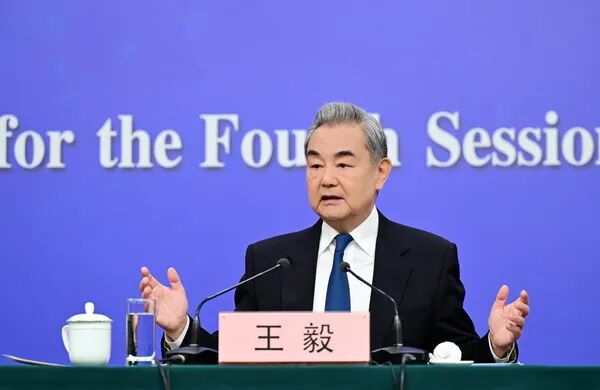
A key factor in maintaining peace and stability in the neighborhood is China's consistent adherence to the policy of building amity, security and prosperity with neighbors, practicing the concepts of amity, sincerity, mutual benefit and inclusiveness and a shared future, and advocating open regionalism and true multilateralism. Just imagine, if China, like some traditional major countries, was keen on carving out spheres of influence in the neighborhood, provoking camp confrontation, or even beggaring thy neighbor, would Asia be as stable as it is today? Would the international community be able to share Asia's development opportunities? Facts have proved that China has always been an anchor for regional security, an engine for development and prosperity, and a practitioner of common Asian values. We are pleased to play such a role and are ready to make greater efforts for this in the future.
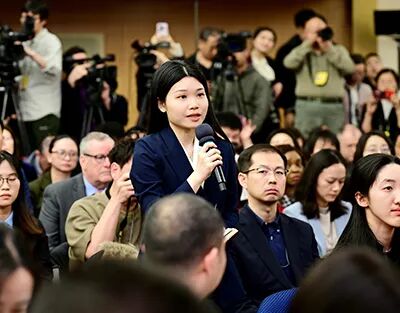
Reporter from China News Service: As more and more Chinese enterprises and citizens go global, China's overseas interests are expanding, and the responsibility of diplomacy for the people is becoming heavier. How will the Foreign Ministry better protect the legitimate rights and interests of overseas Chinese citizens and enterprises?
Wang Yi: Practicing diplomacy for the people is the unswerving purpose of New China's diplomacy, and building a safe China overseas system is the unremitting pursuit of diplomatic personnel in the new era.
Over the past year, we have handled more than 100 major emergencies involving overseas Chinese citizens and institutions, handled more than 79,000 consular protection and assistance cases, answered more than 600,000 calls to the 12308 consular protection hotline, issued more than 3,000 overseas security alerts, rescued more than 50 compatriots kidnapped in Africa, and jointly cracked down on online gambling and telecom fraud with neighboring countries, repatriating tens of thousands of people.
Over the past year, we have resolutely safeguarded the legitimate rights and interests of overseas Chinese enterprises, urged host governments to protect the safety of Chinese personnel and projects, and at the same time resolutely countered unreasonable suppression against Chinese enterprises, helping enterprises enhance their risk prevention and legal rights protection capabilities. Our diplomatic personnel shoulder their missions: some stick to war-torn and turbulent regions for a long time, some face the threat of high-incidence epidemics every day, and some even work and live in container prefabricated houses or under severe high-altitude hypoxia, but everyone has no regrets and fulfills their duties. At this very moment, our embassies and consulates in Iran and the Gulf countries are working hard to ensure the evacuation and safety of Chinese citizens. It can be said that wherever the five-star red flag flies, there are Chinese diplomatic personnel standing guard; wherever there are expectations and demands of Chinese compatriots, there is the warmth and care of the Party and the government.
I want to tell our overseas compatriots that the world in front of you is full of chaos, but the motherland behind you is as stable as a mountain. We will continue to put the people first, further enhance overseas security protection capabilities, and build a global security risk prevention system.
Reporter from China Daily: How do you evaluate the leading role of the Global South in the reform of the global governance system? Major changes have taken place in the international situation since the beginning of this year, with unilateralism and the law of the strong on the rise. How can we achieve the unity and self-reliance of the Global South that China has always advocated?
Wang Yi: The collective rise of the Global South is a distinctive hallmark of the great changes in the world. Over the past 40 years, the share of the Global South in the global economic aggregate has risen from 24% to over 40%, becoming a key driving force for the process of world multi-polarization.
At present, hegemonism and power politics are rampant, seriously impacting the existing international order. The Global South should strengthen communication and coordination, jointly safeguard its legitimate rights and interests, and jointly open up space for independent development.
The Global South is an emerging, positive and good force on the international stage. The more turbulent the world is, the more we must build confidence, unite and cooperate, jointly hold high the banner of peace, development, cooperation and win-win results, and make good use of important platforms such as BRICS, the Shanghai Cooperation Organization, and the Group of 77 and China to speak up for peace and cheer for development.
Multilateralism is the "magic weapon" for the countries of the South. The Global South should promote the international community to practice true multilateralism, safeguard the UN-centered international system and the international order based on international law. We must adhere to the principle that global affairs are handled through consultation by all countries and international rules are formulated jointly by all countries.
The development of the Global South requires an international environment of openness and cooperation. We should advocate inclusive economic globalization, promote the building of an open world economy, firmly safeguard the multilateral trading system, share opportunities and achieve win-win results through openness.
China has always cared deeply about and rooted in the Global South, and is ready to work with other Southern countries to move forward hand in hand on the path of modernization and promote the building of a community with a shared future for mankind.
Reporter from EFE: Trump's return has forced Europe to re-examine its previous negative stance toward China. In recent months, many European leaders have visited China. Does China regard this as a sign of Europe's enhanced strategic autonomy?
Wang Yi: Since last year, China's relations with European countries have warmed up one after another. The total trade volume exceeded 1 trillion US dollars, more than 2 million European tourists visited China visa-free, European leaders have visited one after another, exchanges between each other have become increasingly active, and a number of new cooperation agreements have been reached. Facts have proved that the stability of China-EU relations stems from common interests, and certainty comes from mutual benefit and win-win results.
China's position on developing China-EU relations is clear. We have always believed that Europe is a natural pole in the multi-polar pattern, an important force for maintaining the stability of the international order, and a key partner for achieving Chinese-style modernization. For China-EU relations to develop steadily and well, the key is for Europe to establish a correct perception of China. We have noticed that more and more visionary people in Europe recognize that China is a global partner rather than a competitor, and especially the younger generation views China more objectively and positively.
The essence of China-EU economic and trade relations is complementary advantages, and dynamic balance can be fully achieved in the process of development. The facts of China-EU cooperation show that interdependence is not a risk, integration of interests is not a threat, open cooperation will not weaken economic security, and building walls and barriers will only isolate oneself. We are happy to see our European friends step out of the "small attic" of protectionism and come to the "gymnasium" of the Chinese market to strengthen themselves and enhance their competitiveness here.
Reporter from CGTN: The Palestinian-Israeli conflict is protracted, the Gaza ceasefire is fragile, and the United States has proposed establishing a "peace commission" to resolve the Gaza issue and post-war arrangements. How will China promote the real solution to the Palestinian issue?
Wang Yi: The situation in Gaza concerns the bottom line of international morality. The efforts of the international community to broker a ceasefire in Gaza are welcome, but unremitting efforts are still needed to consolidate the ceasefire, advance reconstruction, and then achieve a comprehensive and lasting solution to the Palestinian issue.
There is only one universally recognized and reasonable solution to the Palestinian issue, and that is the "two-state solution". Any other arrangement or establishment of a new mechanism should promote rather than undermine the "two-state solution", and the international community cannot accept the marginalization of the Palestinian issue again. The United Nations has a greater responsibility to play a leading role in this process.
Turmoil and war are not the fate of the Palestinian people. Like people in other parts of the world, Palestine has the legitimate right to be free from war and achieve peaceful development. As a responsible major country, China will, as always, support the just cause of the Palestinian people in striving for their legitimate national rights, and push the international community to grant justice to the Palestinian people.
Reporter from NBC: Does China accept the framework of "China-US co-governance" to address global challenges? If not, what alternative plan will China put forward to avoid China-US confrontation and convince the world that a rising China has no intention of overthrowing the current international system?
Wang Yi: China and the United States certainly have a major impact on the world. But we should not forget that there are more than 190 countries on this planet. World history has always been written by all countries together, and the future of humanity has always been created by the people of all countries together. Diversity and coexistence are the true face of human society, and multi-polar coexistence is the proper form of the international pattern.
Looking back at history, every struggle for hegemony and camp confrontation among major countries has brought disasters and sufferings to humanity. For this reason, China will never follow the old path of seeking hegemony when it grows strong, nor does it agree with the logic of "major country co-governance". China's Constitution clearly stipulates that it adheres to an independent foreign policy and a path of peaceful development. Chinese leaders have repeatedly emphasized internationally that no matter how the international situation evolves and how far China develops, China will never seek hegemony or expansion.
As for how the international pattern should develop, China's proposal is to build an equal and orderly world multi-polarity. Equality means that all countries, big or small, strong or weak, are equal members of the international community, and can find their own place and play their due role in the multi-polar pattern. Orderly means that all countries must abide by universally recognized international rules, that is, the purposes and principles of the UN Charter and the basic norms of international relations.
Building an equal and orderly world multi-polarity should be the common responsibility of all countries. Major countries have more resources and greater capabilities, so they should show more vision and responsibility, and take the lead in abiding by rules, keeping promises, and respecting the rule of law. China is ready to continue to be a constructive force in a changing world and work with all countries to jointly embrace the arrival of a multi-polar world.
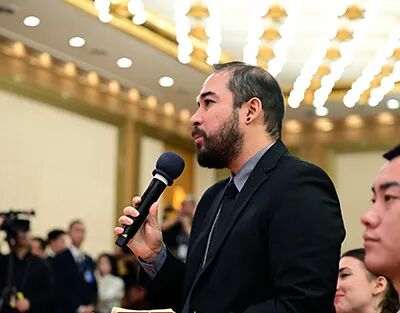
Reporter from Grupo Rede Brasil Atual: The US National Security Strategy released last year shows that the US priority is to interfere in China-Latin America relations by pressuring Latin American countries. How will China respond?
Wang Yi: The international arena in the 21st century should not stage old dramas from the 19th century. The resources of Latin America belong to the Latin American people, the path that Latin American countries take should be chosen by the Latin American people themselves, and who to make friends with should be decided by Latin American countries themselves.
China-Latin America cooperation is mutual assistance and support among countries of the Global South. Looking back over the past half century, the rapid development of China-Latin America relations is mainly due to China's consistent respect for the Latin American people and adherence to equal treatment and mutual benefit with all Latin American countries. We never engage in geopolitical calculations, never interfere in other countries' internal affairs, and never ask everyone to take sides. At last year's ministerial meeting of the China-LAC Forum, we jointly launched five major projects on solidarity, development, civilization, peace and people-to-people bonds, drawing a blueprint for China and Latin America to march toward modernization together.
China-Latin America cooperation does not target any third party and should not be interfered with by any third party. We are full of confidence in the future of China-Latin America relations. No matter how the situation changes, China is ready to work with Latin American countries to firmly advance the building of a China-Latin America community with a shared future, so that the China-Latin America comprehensive cooperative partnership can better benefit the two peoples.
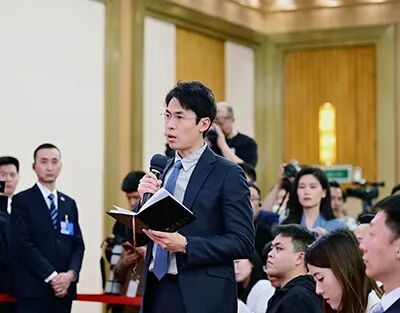
Reporter from Xinhua News Agency: What innovative measures will the Foreign Ministry take to serve the advancement of Chinese-style modernization through high-quality development around the 15th Five-Year Plan?
Wang Yi: The 15th Five-Year Plan is a new blueprint for China's development and a new vision for win-win cooperation between China and the world. This year is the first year of the 15th Five-Year Plan. The diplomatic front will actively coordinate diplomatic and foreign affairs resources to create a more favorable external environment for serving high-quality development and advancing Chinese-style modernization. We will focus on three aspects:
First, continue to serve as a booster for high-level opening-up. We will combine high-level exchanges and major diplomatic agendas to promote the high-quality development of the Belt and Road Initiative, expand the network of high-standard free trade zones, maintain the stability and smooth flow of industrial and supply chains, and strive for a fair, open and non-discriminatory business environment for Chinese enterprises to go global.
Second, continue to broaden the fast track for personnel exchanges. We have implemented unilateral visa exemption for 50 countries and full mutual visa exemption with 29 countries. Last year, the proportion of foreign nationals entering China visa-free reached as high as 73%. Next, we will continue to optimize personnel exchange policies, further release the dividend of visa exemption, improve various supporting services, make it more convenient and comfortable for foreign friends to travel and live in China, and make it smoother and safer for Chinese citizens to go global.
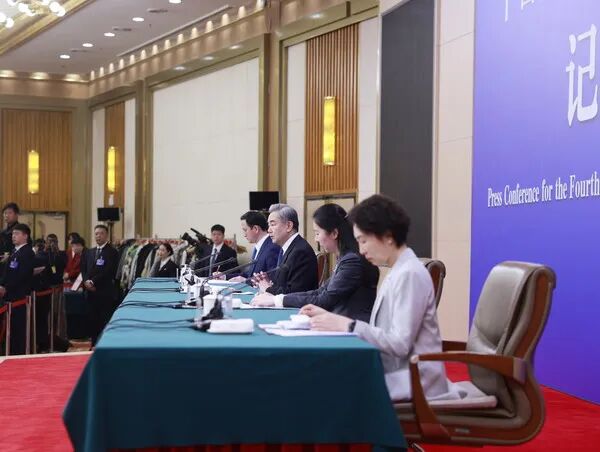
Third, continue to build new windows for openness and integration. We will innovate and upgrade the "Local Tours for Diplomatic Envoys to China" activity, accelerate the establishment of the "Diplomatic Service Information Platform for High-Quality Development in the 15th Five-Year Plan", help localities connect with international resources, exchange governance experience, expand foreign cooperation, and make diplomacy better empower local development.
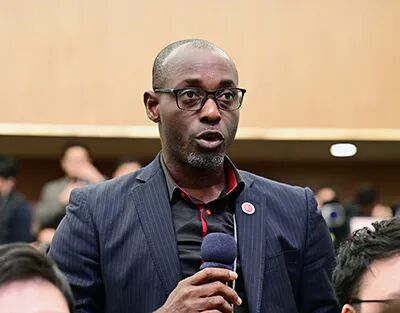
Reporter from News Agency of Nigeria: This year marks the 70th anniversary of the establishment of diplomatic relations between China and Africa and the "China-Africa Cultural and People-to-People Exchange Year". In this special year, what new developments and highlights will China-Africa relations have?
Wang Yi: Over the past 70 years, China-Africa friendship has withstood the test of international vicissitudes and shown strong vitality. Chinese foreign ministers have insisted on making Africa the first destination of their annual visits, a practice that has been upheld for 36 years, consistently and rain or shine, and has become a spirit and a belief of China's diplomacy. When I visited Ethiopia earlier this year, people recalled the touching scenes of Premier Zhou Enlai's visit to Africa. In Tanzania, the story of the TAZARA Railway built with China's assistance is still widely spread, and many young Chinese engineers and technicians sacrificed their precious lives and are buried there. It can be said that China-Africa friendship has been passed down from generation to generation with heart-to-heart exchanges and built through blood, sweat and toil.
Entering a new era, President Xi Jinping attaches great importance to China-Africa relations, put forward the principles of sincerity, real results, amity and good faith, and the correct view of justice and interests, leading China-Africa cooperation to a new height. In the first two months of this year, President Xi Jinping sent three letters and messages to African brothers. The first was a congratulatory letter at the opening ceremony of the "China-Africa Cultural and People-to-People Exchange Year", the second was a reply letter to veteran fighters of Zimbabwe's liberation struggle, and the third was a congratulatory message to the AU Summit for the 14th consecutive year. These letters convey the earnest expectation of China's top leader for the inheritance of China-Africa friendship and reflect China's firm support for Africa's development and revitalization.
China-Africa relations will usher in a series of new developments this year, and I suggest you focus on three aspects.
First, new steps will be taken in building a China-Africa community with a shared future. We will receive visits from many African heads of state in 2026, strengthen mutual support as all-weather partners, and write new stories of a shared future.
Second, China will fully implement zero tariffs on 100% tariff lines of African products starting from May 1. Driven by China's high-level opening-up, we will use the "subtraction" of tariffs to promote the "addition" of trade and achieve the "multiplication" of people's livelihood, so that China's large market can provide greater opportunities for Africa.
Third, the "China-Africa Cultural and People-to-People Exchange Year" has kicked off, with nearly 600 wonderful exchange activities to be held during the year. China is ready to work with African brothers to deepen mutual learning among civilizations, promote people-to-people bonds, and pass on China-Africa friendship from generation to generation.
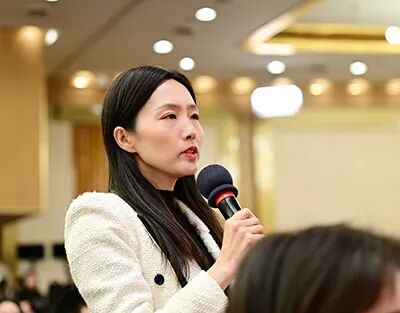
Reporter from People's Daily: Facing the rise of deglobalization, how will China resist protectionism, better share opportunities with the world, and lead the sustained and stable growth of the global economy?
Wang Yi: The world economy is facing headwinds, and globalization is encountering a backlash. Individual countries have resorted to tariff barriers and decoupling and supply chain disruptions, which is like putting out a fire with firewood and will eventually backfire. As President Xi Jinping said, it is impossible and against the historical trend to return the sea of the world economy to isolated small lakes. Engaging in protectionism is like locking oneself in a dark room; it seems to avoid the wind and rain, but actually cuts off the sunshine and air.
The problems facing economic globalization can only be solved through more sustainable development and fairer and more effective governance. To this end, President Xi Jinping proposed to advance inclusive economic globalization, with the goal of continuously expanding the "cake" of economic globalization and sharing it together. The principle is not to leave any country behind or widen the gap between rich and poor. The path is to promote countries to complement each other's advantages and share opportunities in open development, and achieve common development and mutual success through the integration of interests.
China means what it says and does what it advocates. Over the past five years, China's economy has grown at an average annual rate of 5.4%, contributing about 30% to global economic growth, exceeding the total contribution of the G7. Looking ahead, as the world's largest potential consumer market and largest emerging economy, China has more sound supporting conditions for long-term economic growth and a more consolidated basic trend of sustained growth, and will continue to be the most stable driving force for global growth.
The greatness of a major country lies in benefiting the world. China will expand high-level opening-up, not only assuming the responsibility of a "world factory", but also giving full play to the role of a "world market". China will firmly support the liberalization and facilitation of trade and investment, firmly safeguard the stability and smooth flow of global industrial and supply chains, firmly defend the multilateral trading system with the WTO at its core, firmly uphold a fair and open international economic and trade order, and make new Chinese contributions to the strong and sustainable growth of the world economy.
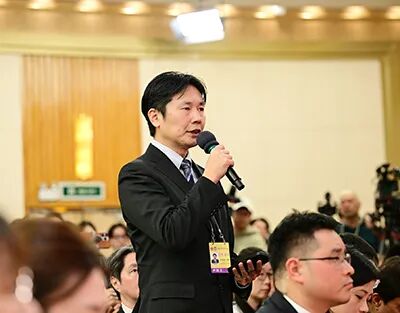
Reporter from Kyodo News: Last November, China strongly protested against Japanese Prime Minister Takaichi Sanae's remarks related to Taiwan, and Japan-China exchanges have stalled. In which direction does China hope Japan-China relations will develop this year?
Wang Yi: The direction of Japan-China relations depends on Japan's choice.
Last year marked the 80th anniversary of the victory of the Chinese People's War of Resistance Against Japanese Aggression. In this special year, what Japan should have done is to deeply reflect on the wrong path it has taken, including the crimes of aggression and colonial rule over Taiwan. However, Japan's incumbent leader even claimed that a Taiwan incident would constitute an "existential crisis situation" for Japan, on the basis of which so-called collective self-defense could be exercised. As we all know, the exercise of the right of self-defense is premised on an armed attack on one's own country. May I ask: Taiwan affairs are China's internal affairs; what right does Japan have to interfere? What right does Japan have to exercise the right of self-defense if an incident occurs in China's Taiwan region? Does the so-called collective self-defense mean hollowing out the peace constitution that stipulates the renunciation of the right to wage war? Recalling that Japanese militarism once launched foreign aggression under the pretext of an "existential crisis situation", it cannot but arouse high vigilance and concern among the Chinese and Asian peoples: where is Japan heading?
This year marks another 80th anniversary, the 80th anniversary of the opening of the Tokyo Trials. Eighty years ago, 11 judges from 11 countries spent two and a half years on the trial, revealing the heinous crimes of Japanese militarism with massive ironclad evidence. The Tokyo Trials judged human conscience and historical justice. Today, 80 years later, history has given Japan another opportunity for introspection. Taking history as a mirror, one can know the rise and fall; forgetting the past, one will repeat the mistakes. We hope that the broad Japanese people can see clearly and not allow anyone to overreach themselves and repeat the mistakes again. A growing China and its 1.4 billion people will never allow anyone to advocate colonialism or whitewash aggression again.
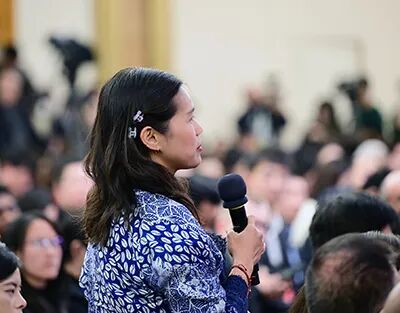
Reporter from Antara: The Philippines has taken over as the rotating chair of ASEAN for 2026. How does China view the prospect of concluding consultations on the Code of Conduct in the South China Sea (COC) with ASEAN countries?
Wang Yi: The South China Sea is the busiest, safest and freest shipping sea area in the world today. Over the past year, cooperation in the South China Sea has maintained a good momentum. China and Indonesia have in-depth discussions on joint maritime development, held bilateral dialogues on maritime issues with Malaysia, and carried out cooperation on sustainable fishery development with Vietnam. Not long ago, the China Coast Guard also successfully rescued more than 10 Filipino crew members in distress in the South China Sea. This fully shows that peace, cooperation and friendship are the new narrative of the South China Sea. Creating disturbances is unpopular, and stirring up troubles has no market.
To achieve long-term stability in the South China Sea, a solid institutional guarantee is still needed. On the basis of continuing to effectively implement the Declaration on the Conduct of Parties in the South China Sea (DOC), consultations on the COC have entered a critical stage, and all parties expect to conclude the consultations within this year. China has the confidence and determination to work with all parties to remove disturbances, bridge differences, reach consensus as soon as possible, and provide an effective "golden code" for all parties to manage differences, enhance mutual trust and promote cooperation.
We also hope that during the Philippines' tenure as the rotating chair of ASEAN this year, it can realize the responsibilities it shoulders, not be tempted by its own interests, demonstrate its due responsibility, and play a positive role in promoting regional peace and stability.
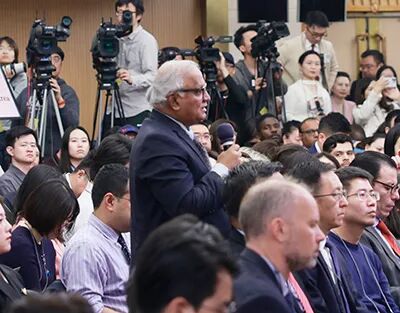
Reporter from Press Trust of India: After five years of trough, India-China relations are now on the track of normalization. India holds the rotating chair of BRICS this year. How does China view the improvement and future direction of bilateral relations?
Wang Yi: Last August, President Xi Jinping and Prime Minister Narendra Modi met successfully in Tianjin. Following the meeting in Kazan, this has led to a further improvement in India-China relations. The two sides have earnestly implemented the important consensus reached by the two heads of state, strengthened exchanges at all levels, achieved a new high in bilateral trade, and witnessed increasingly active people-to-people exchanges, bringing tangible benefits to both peoples.
China and India are important neighbors to each other, both belong to the Global South, and share profound cultural origins and broad common interests. Mutual trust and cooperation between the two countries are conducive to common development, while division and confrontation are not conducive to Asia's revitalization. The two sides should follow the direction set by the two heads of state, remove disturbances and meet each other halfway. First, adhere to the correct strategic perception and implement the positioning of being partners rather than rivals and opportunities rather than threats to each other. Second, grasp the direction of good-neighborliness and friendship and jointly maintain peace and stability in the border areas. Third, focus on development as the greatest common divisor and promote practical cooperation to achieve more visible results. Fourth, demonstrate responsibility and support each other's tenure as BRICS rotating chairs this year and next, and bring new hope to the vast number of Southern countries through more fruitful BRICS cooperation.
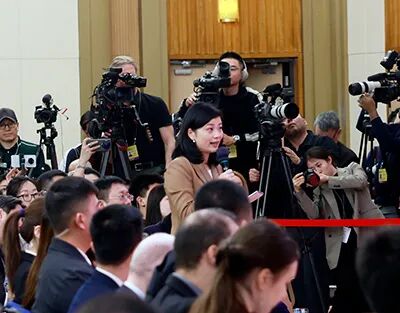
Reporter from China Review News: Recently, the Lai Ching-te authorities have repeatedly claimed that Taiwan is a "sovereign and independent country" and that the Taiwan question is not China's internal affair. The Taiwan question and the situation across the Taiwan Strait are heating up. What is your assessment?
Wang Yi: Taiwan has been an inalienable part of China's territory since ancient times, and it has never been, is not, and will never be a country. Taiwan's return to China is the fruit of the victory of the Chinese People's War of Resistance Against Japanese Aggression and the victory of World War II. A series of international legal documents such as the Cairo Declaration, the Potsdam Proclamation, the Japanese Instrument of Surrender, and UN General Assembly Resolution 2758 have firmly established Taiwan's status. Any attempt to create "two Chinas" or "one China, one Taiwan" internationally is doomed to failure.
The DPP authorities' stubborn adherence to the separatist stance of "Taiwan independence" is the root cause of undermining peace and stability across the Taiwan Strait. Facts have repeatedly proved that the clearer the international community's position in opposing "Taiwan independence" separatist acts and the firmer its adherence to the one-China principle, the more guaranteed peace and stability across the Taiwan Strait will be.
The Taiwan question is China's internal affair and the core of China's core interests; this red line cannot be crossed or trampled on. We will never allow any person or force to split Taiwan, which was recovered more than 80 years ago, from China again. The international community has formed an overwhelming consensus on adhering to the one-China principle. More and more countries stand with China, not only reaffirming their adherence to the one-China principle and recognizing Taiwan as part of China's territory, but also explicitly opposing all "Taiwan independence" separatist acts and supporting China's great cause of reunification. This fully shows that opposing "Taiwan independence" and promoting reunification conform to the trend of the times and meet international expectations.
The historical process of resolving the Taiwan question and achieving the complete reunification of the motherland is irresistible. Those who follow it will prosper, and those who go against it will perish.

Reporter from Global Times: Under the current situation, global contradictions and conflicts are becoming increasingly acute, and competition and confrontation are intensifying. Why does China's diplomacy aim to build a community with a shared future for mankind?
Wang Yi: Indeed, as you said, humanity is in an era full of challenges. Looking back at history, no matter how difficult the world faces, there are always pioneers who relentlessly pursue ideals and light. The vision of building a community with a shared future for mankind put forward by President Xi Jinping demonstrates the foresight and broad mind of a major country's leader, answering the question of the times about where humanity is heading. It is to tell the world that the enemy of humanity is not each other, but war, poverty, hunger and injustice. To overcome these challenges, we cannot rely on going it alone or seeking self-interest; we must unite and cooperate and work together as one. Isolation leads to helplessness, and unity brings strength. People of all countries are increasingly realizing the epochal value and truth of the vision of a community with a shared future for mankind, which, like a lighthouse, illuminates the way forward for humanity.
The vision of a community with a shared future for mankind also reflects China's major country responsibility and historical mission to the world. The Chinese nation has always had the vision of the world for the common good and pursued the ideal of universal harmony. The great rejuvenation of the Chinese nation and the rise of a major country with 1.4 billion people will never replicate the old path of hegemony and expansion of traditional major countries. Instead, we will unswervingly follow the path of peaceful development, and promote all countries to follow the path of peaceful development together, and jointly build a world of lasting peace, universal security, common prosperity, openness and inclusiveness, and cleanliness and beauty.
We are pleased to see that in recent years, the vision of building a community with a shared future for mankind has become increasingly popular, winning the support of more than 100 countries and international organizations, recognition from nearly 80% of the international public opinion, and more than 40 countries and regional organizations have joined the ranks of jointly building a community with a shared future. This once again shows that "a just cause enjoys abundant support", and a just cause will surely win the support of all countries and gather the strength of the people.
The future of humanity is bright, but the bright future will not come automatically. Building a community with a shared future for mankind is both a beautiful vision and a historical process, requiring the continuous efforts of generations. With firm conviction and practical actions, China will work hand in hand with all parties to continuously turn the vision of a community with a shared future for mankind into reality.